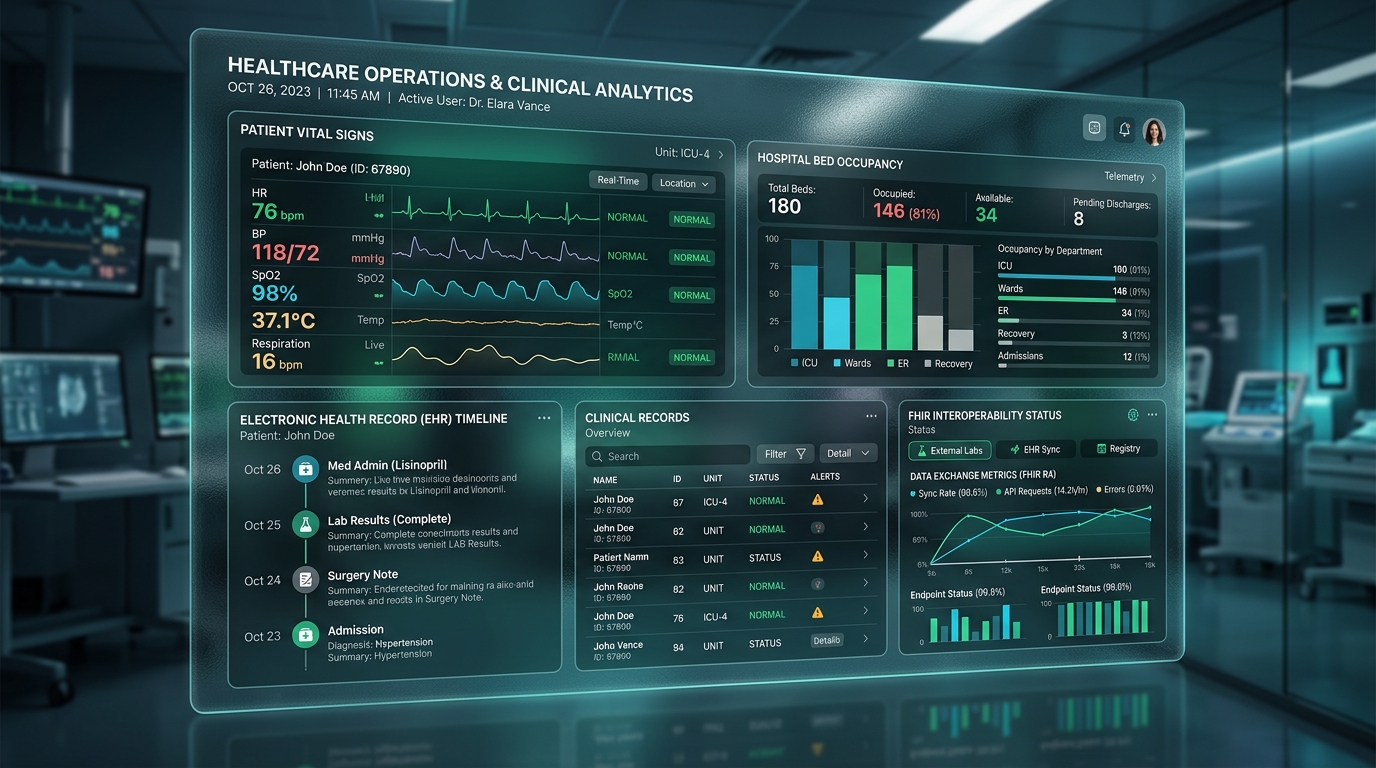
The modern healthcare ecosystem is experiencing an unprecedented surge in clinical telemetry, diagnostic imaging, and longitudinal patient health records. However, historical information silos between Emergency Departments (ED), Inpatient Wards (IPD), Laboratory Information Systems (LIS), and retail pharmacies frequently cause care coordination delays and medical documentation discrepancies.
The Core Architectural Shift: From HL7 v2 Pipes to FHIR R4 Resources
For more than three decades, hospital IT infrastructures relied predominantly on event-driven HL7 v2 pipe-delimited messages (such as ADT for admission/discharge/transfer, and ORU for lab observation reports). While robust, these point-to-point connections require custom interface engines, expensive VPN tunnels, and complex parsing dictionaries.
By standardizing on Fast Healthcare Interoperability Resources (FHIR R4), CodesForMD provides modern RESTful JSON endpoints, granular resource-level access control (OAuth2 / SMART on FHIR), and universal semantic mapping via LOINC, SNOMED CT, ICD-10, and RxNorm.
“Achieving semantic interoperability is no longer merely an IT compliance checkbox; it is the fundamental prerequisite for clinical safety and real-time operational efficiency.”
Key Benefits Measured Across Acute Networks
- 38% Reduction in Bed Boarding Hours: Live admission queues automatically synchronize with inpatient ward bed census.
- Zero Double-Entry Medication Errors: Ambulatory CPOE order sets seamlessly route to pharmacy dispensing with real-time drug interaction screening.
- Automated Clearinghouse RCM: Superbills generated upon cryptographic clinician sign-off directly translate into clean ANSI X12 837 claims.
As health systems continue to scale multi-facility campuses, adopting a unified multi-tenant clinical operating system ensures future-proof compliance and superior patient care outcomes.